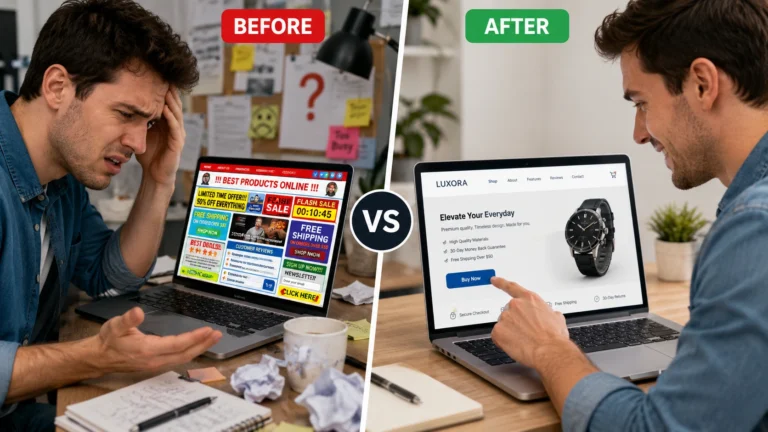
The Psychology of High-Conversion UI: Designing for the 2026 Human
The 4 Psychological Triggers of 2026 Conversion
|
Trigger
|
Psychological Effect
|
2026 Design Execution
|
|
Cognitive Ease
|
Reduces “Brain Fog”
|
Use high-contrast typography and generous whitespace to make information easy to parse.
|
|
Social Validation
|
Builds Instant Trust
|
|
|
Anticipatory Design
|
Creates “Flow State”
|
|
|
Micro-Interactions
|
Enhances Engagement
|
Subtle animations and haptic-style feedback that make the user feel “in control.”
|
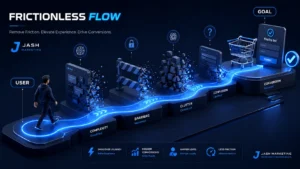
The architecture of a frictionless conversion journey.
Designing for “Frictionless Flow”
Why Content and UI Must Be “Symbiotic”
Frequently Asked Questions (UI Psychology Edition)
Q: Does “Premium Design” always lead to higher conversion?
A: Not necessarily. Design must be Functional. A beautiful site that is hard to use will always be outperformed by a simple site that is perfectly intuitive. At Jash Marketing, we balance “Aesthetic Authority” with “Conversion Logic.”
Q: How does UI affect SEO in 2026?
A: Google and other search engines now use User Experience Signals (like “Time on Page” and “Interaction Depth”) as primary ranking factors. A high-conversion UI directly boosts your SEO Rankings.
Q: Can we A/B test psychological triggers?
A: Absolutely. We recommend continuous Multivariate Testing to see which colors, button placements, and headlines resonate best with your specific audience.
Conclusion: Design for the Subconscious
Want us to implement this?
Stop reading theories and let our senior operators build this infrastructure for your brand.
Request an Audit