For decades, the rule of business was: “Keep the owner in the background and let the brand take the spotlight.”
In 2026, that rule is dead.
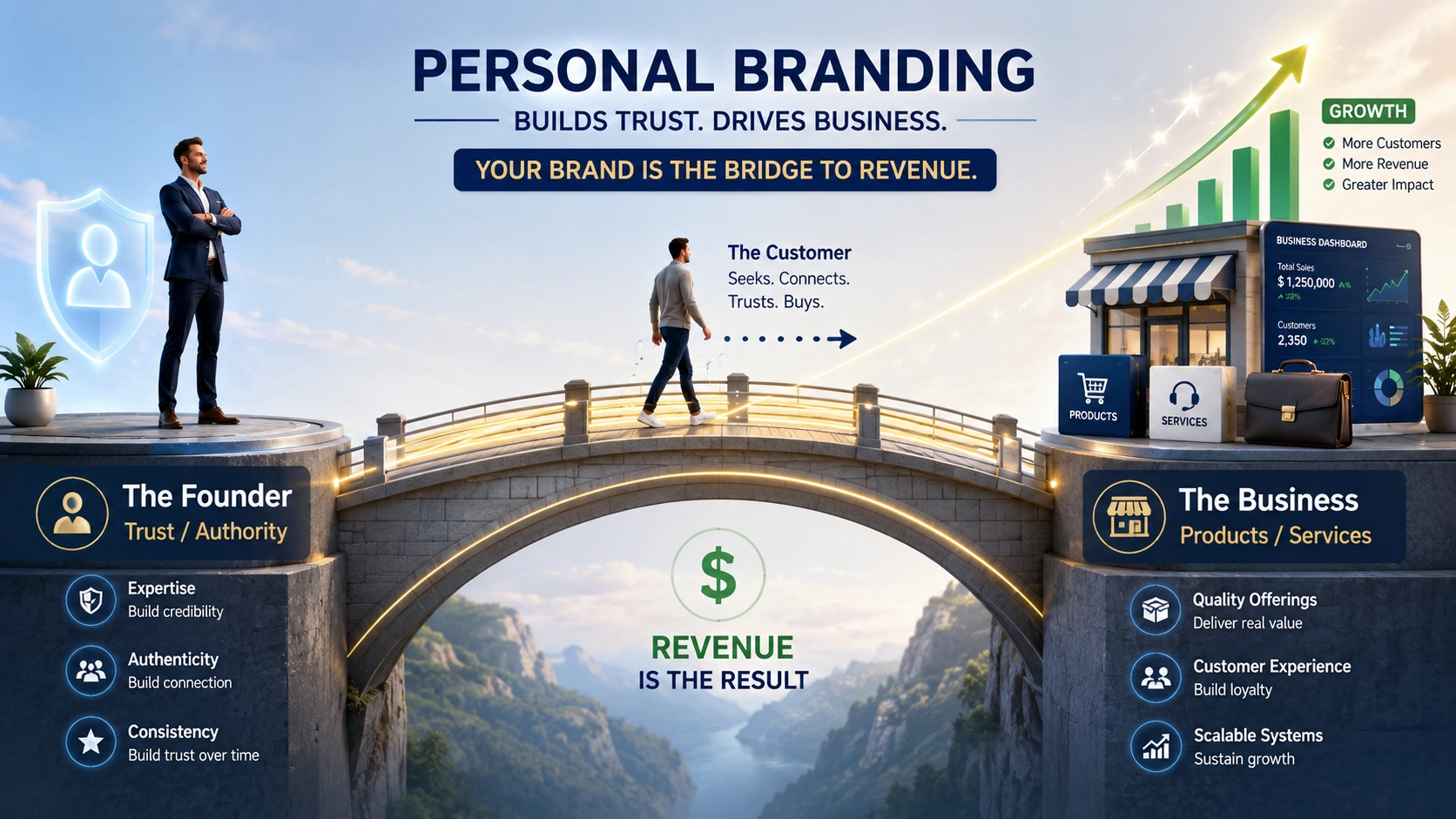
We are living in the era of Founder-Led Growth. Whether you are a lawyer, a software developer, or a retail store owner, your customers no longer want to talk to a “Company Representative.” They want to hear from the person who started it all.
Why? Because in a world full of AI-generated websites and robotic corporate emails, humanity is the new luxury.
When the founder becomes the face of the brand, trust is built 10x faster, and the “sales” process becomes a “conversation.”
If you and your competitor both offer the same service at the same price, how does a customer choose?
They choose the one they trust more.
A personal brand creates “Pre-Sold” customers. When a potential client sees you sharing your expertise, your failures, and your vision on social media, they aren’t just buying a service—they are buying into you.
The Benefits of Founder-Led Growth:
Instant Authority: You stop being a “vendor” and start being an “expert.”
Higher Pricing: People pay a premium for specialists and recognized leaders.
Easier Hiring: Top talent wants to work for inspiring leaders, not boring companies.
Algorithm Love: Social media algorithms in 2026 prioritize “People” over “Pages.”
If you want to turn your expertise into a lead-generation machine, our Social Media Marketing services can help you build your presence.
Many founders say, “I don’t want to be an ‘influencer’.”
Here is the secret: You don’t have to be an influencer. You just have to be an Authority.
An influencer seeks attention; an authority provides value. Here is the 3-step roadmap to building a professional personal brand:
Don’t talk about everything. Pick one thing you are the absolute best at.
Example: Instead of “Marketing,” focus on “Scaling E-commerce brands using AI.”
You don’t need to spend 10 hours writing a script. Just document your day.
Share a lesson you learned from a mistake today.
Post a screenshot of a win your client just had.
Give your honest opinion on a new industry trend.
Your personal brand should be the “doorway” to your company. Your content attracts the lead, and your Website closes the sale.
| Feature | Corporate Brand (The Logo) | Personal Brand (The Founder) |
| Tone | Formal, Polished, Safe | Authentic, Raw, Opinionated |
| Trust Speed | Slow (Needs reviews/years) | Fast (Based on personality) |
| Engagement | Low (People ignore ads) | High (People love stories) |
| Flexibility | Rigid (Hard to change) | Fluid (Can evolve with the founder) |
| Connection | Transactional | Emotional |
✅ DO: Be honest about your failures. People trust someone who says, “I tried this and it failed,” more than someone who says, “I am perfect.”
❌ DON’T: Try to sound like a corporate brochure. Avoid words like “synergy,” “world-class,” and “industry-leading.” Speak like a human.
✅ DO: Engage with your peers. Comment on other leaders’ posts. Build a network of authorities.
❌ DON’T: Buy followers. A fake audience is a dead audience. 100 real industry leaders are worth more than 100,000 random bots.
✅ DO: Use a consistent visual style. Use the same high-quality headshot across LinkedIn, X, and your website to create recognition.
❌ DON’T: Post without a purpose. Every piece of content should either Teach, Inspire, or Entertain.
If you have the vision but not the time, our Content Marketing team can ghostwrite your authority content for you.
Q: What if I am an introvert and hate being on camera?
A: You don’t need to dance on TikTok. You can build a massive personal brand through writing (LinkedIn/X) or simple “talking head” videos where you just share one tip. Authority is about the value of your words, not your acting skills.
Q: Does this take away from the company brand?
A: No, it enhances it. When the founder is strong, the company looks more stable and expert. If you ever sell the company, a strong brand foundation still remains, but the growth phase is much faster when led by a person.
Q: How much time does this take per week?
A: With a system, only 2-3 hours. If you document your work as you go, the content is already created. We can handle the editing and posting for you.
In 2026, the biggest risk is staying invisible. While your competitors are hiding behind a logo and a “Contact Us” form, you have the opportunity to become the face of your industry.
When you build a personal brand, you aren’t just growing a business—you are building an asset that stays with you for the rest of your career.
Stop being the best-kept secret in your industry.
Let Jash Marketing help you step into the spotlight. We specialize in turning founders into authorities and authority into revenue.
Ready to build your legacy? Contact us today and let’s build your personal brand!
Most business owners treat their marketing like a grocery list:
“I need a website.”
“I need some Facebook posts.”
“I need to rank on Google.”
They treat these as separate tasks. But here is the truth: Your customers don’t experience your business as a list. They experience it as a journey.
A customer might find you on Google (SEO), check your Instagram to see if you’re “real” (Social Media), read a blog post to see if you’re an expert (Content), and finally buy from you after receiving a discount code in their inbox (Email).
If these channels aren’t connected, the journey is broken. In 2026, the secret to scaling is Omnichannel Marketing.
Many people confuse “Multi-channel” (being in many places) with “Omnichannel” (being connected in many places).
Multi-channel is like having five different stores that don’t talk to each other.
Omnichannel is like having one giant store with five different doors. No matter which door the customer enters, the experience is the same.
| Feature | Multi-Channel (Old Way) | Omnichannel (2026 Way) |
| Strategy | “Let’s try a bit of everything.” | “Let’s build a connected ecosystem.” |
| Messaging | Different vibes on each platform. | One consistent brand voice everywhere. |
| Customer View | Treated as a stranger on every app. | Recognized across all touchpoints. |
| Goal | Individual channel growth. | Total Customer Lifetime Value (LTV). |
| Result | ❌ Fragmented & Confusing | ✅ Seamless & Trustworthy |
If your marketing feels fragmented, it’s time to integrate. Let us build your ecosystem with our Full-Service Digital Marketing approach.
Imagine you own a high-end furniture store. Here is how an Omnichannel strategy “surrounds” your customer:
The Discovery: A user searches for “Modern Velvet Sofas” and finds your blog post via SEO.
The Trust Build: They visit your Website, see your professional design, and read a case study about a happy client.
The Reminder: They leave without buying. Suddenly, a Paid Ad appears on their Instagram feed showing the exact sofa they were looking at.
The Engagement: They follow your Social Media and see a “Behind the Scenes” video of how the sofas are made.
The Closing: They sign up for your newsletter to get a 10% discount. An automated Email reminds them that the sofa is almost sold out.
The Sale: They buy the sofa.
This isn’t magic; it’s a connected system. Each channel supports the other.
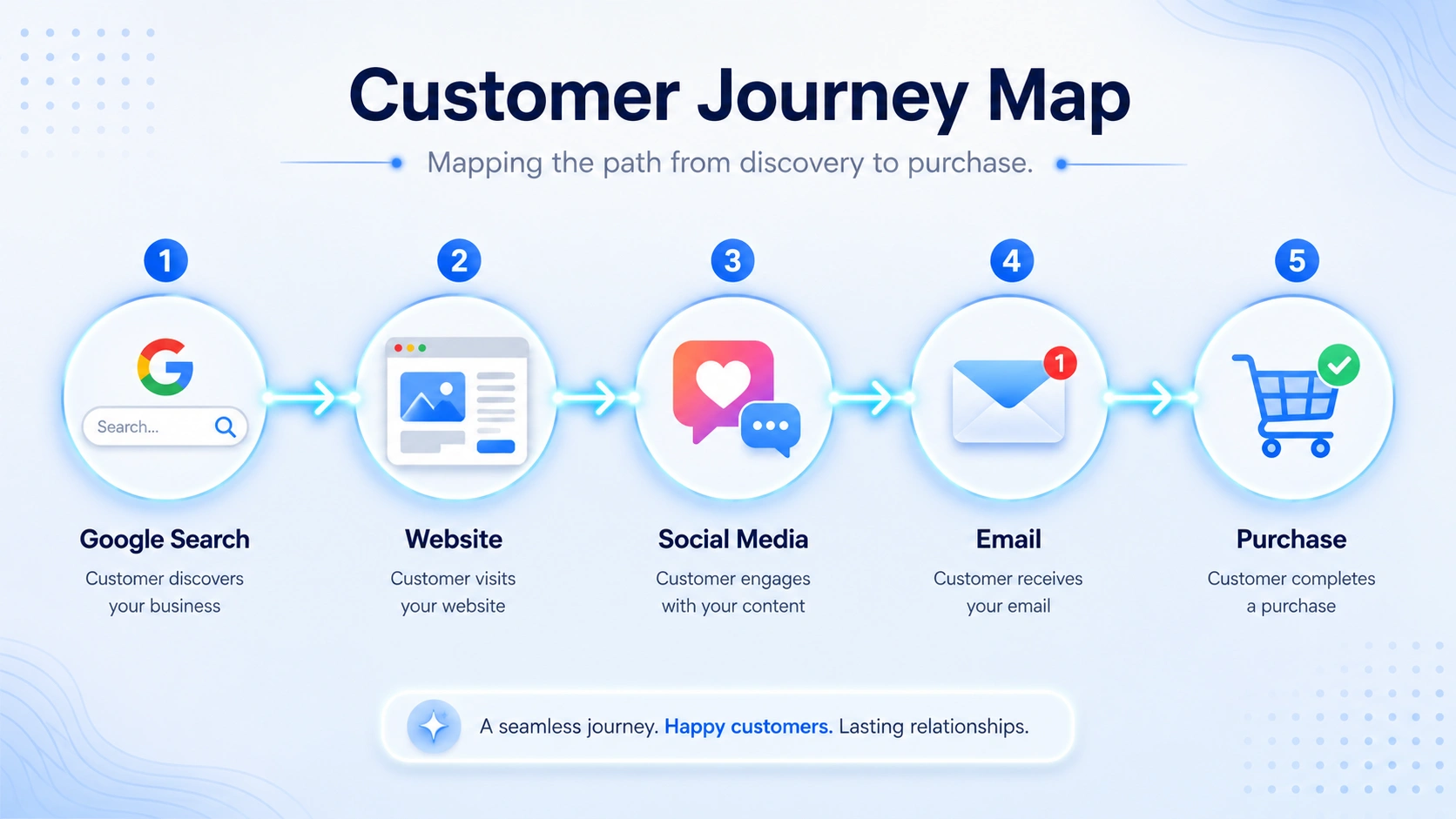
A connected journey leads to higher trust and more sales.
To make this work, you need more than just tools; you need a strategy.
Whether a customer reads a tweet or a formal proposal, the “feeling” should be the same. If your website is “Luxury and Professional” but your TikTok is “Silly and Random,” you create a trust gap.
Your ads should know what your website visitors are doing. Your emails should know what your social media followers are interested in. This is where Data-Driven Marketing becomes your greatest weapon.
Don’t make the customer work. The link in your Instagram bio should lead to a mobile-optimized landing page, not a generic homepage. The “Buy Now” button in your email should take them directly to the checkout.
❌ STOP: Running ads to a broken website.
If you spend $1,000 on ads but your website takes 10 seconds to load, you are throwing money away. Fix the Web Design first.
❌ STOP: Posting the exact same content on every platform.
A LinkedIn audience wants professional insights; a TikTok audience wants fast entertainment. Adapt your Content Marketing to fit the platform, but keep the brand voice the same.
❌ STOP: Ignoring the “Post-Purchase” journey.
The journey doesn’t end at the sale. Use email and social media to turn a one-time buyer into a lifelong fan.
Q: Is Omnichannel marketing too expensive for a small business?
A: Actually, it’s more cost-effective. When your channels work together, your cost per lead (CAC) drops because you aren’t wasting money on fragmented campaigns.
Q: Where do I start if I have nothing connected?
A: Start with your foundation. First, build a high-converting Website. Then, set up SEO to get traffic. Finally, add Paid Ads and Email to capture and close those leads.
Q: How long does it take to see results from an integrated strategy?
A: While individual ads work instantly, a full ecosystem takes 3 to 6 months to fully synchronize. However, once it’s running, it creates a “compounding effect” where your growth accelerates every month.
In 2026, you cannot afford to be a “one-trick pony.” You can’t just rely on SEO or just rely on Social Media. The winners are the brands that build a digital fortress—a seamless, integrated system that captures attention and converts it into profit.
Don’t just buy a service. Build an ecosystem.
At Jash Marketing, we don’t just check boxes. We architect growth. We look at your business as a whole and connect the dots to ensure you are dominating every single touchpoint.
Ready to build your digital empire? Contact Jash Marketing today for a full ecosystem audit!
Imagine you are driving a car, but your windshield is painted black. You have a powerful engine, you have fuel, and you are moving fast—but you have no idea where you are going or if you are about to hit a wall.
That is exactly how most business owners run their marketing.
They spend money on Paid Ads, they write blogs for SEO, and they post on social media. But when asked, “Which one of these is actually bringing in the most money?” most answer with: “I think it’s the ads… maybe?”
In 2026, “maybe” is not a strategy. To grow a sustainable business, you need Data-Driven Marketing.
Data-driven marketing is simply the process of using real numbers (data) to make decisions about your business.
Instead of saying, “I feel like this ad is working,” a data-driven owner says, “This ad has a 4% conversion rate and costs us $2 per lead, so we should increase the budget by 20%.”
It takes the guesswork out of the equation and ensures that every dollar you spend is an investment, not a gamble.
Many business owners get distracted by “Vanity Metrics.” These are numbers that look good on paper but don’t put money in the bank (like likes, follows, or raw page views).
In 2026, you should only focus on these three “North Star” metrics:
How much does it cost you to get one new customer?
Calculation: Total Marketing Spend ÷ Number of New Customers.
Why it matters: If it costs you $50 to get a customer who only spends $30, your business is shrinking, even if your “likes” are growing.
How much money does a customer spend with you over their entire life?
Why it matters: If you know a customer spends $500 over a year, you can afford to spend more to acquire them initially.
What percentage of your visitors actually take action?
Why it matters: This tells you if your Web Design is working. A low conversion rate means your website is “leaking” money.
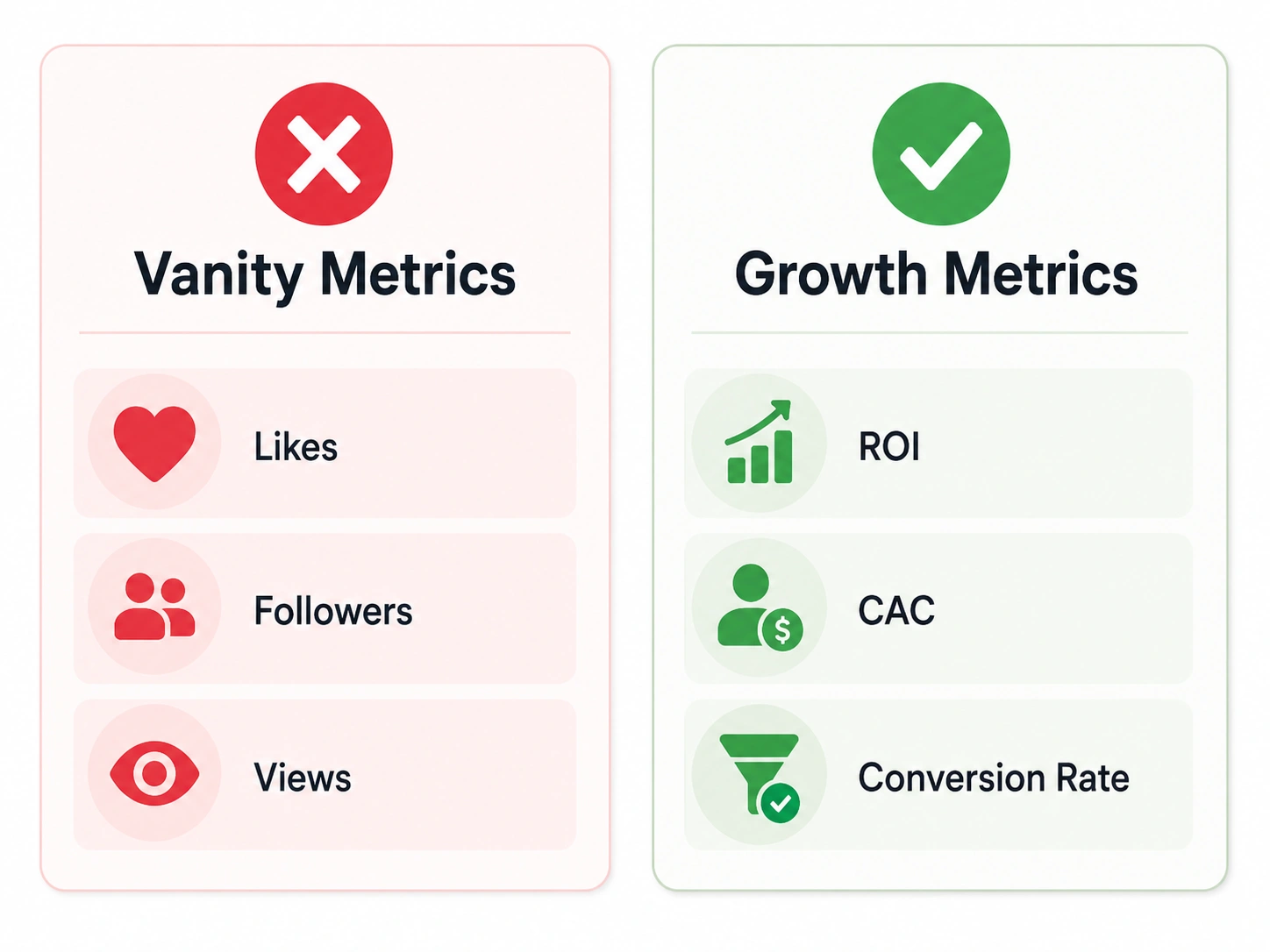
Stop chasing likes and start chasing ROI.
| Scenario | The Guesswork Approach (Old Way) | The Data-Driven Approach (2026 Way) |
| Choosing a Topic | “I think people like this topic.” | “Our data shows a 200% increase in searches for this topic.” |
| Ad Budget | “Let’s put $100 into Facebook and see.” | “Facebook leads are 2x cheaper than Google; we are shifting the budget.” |
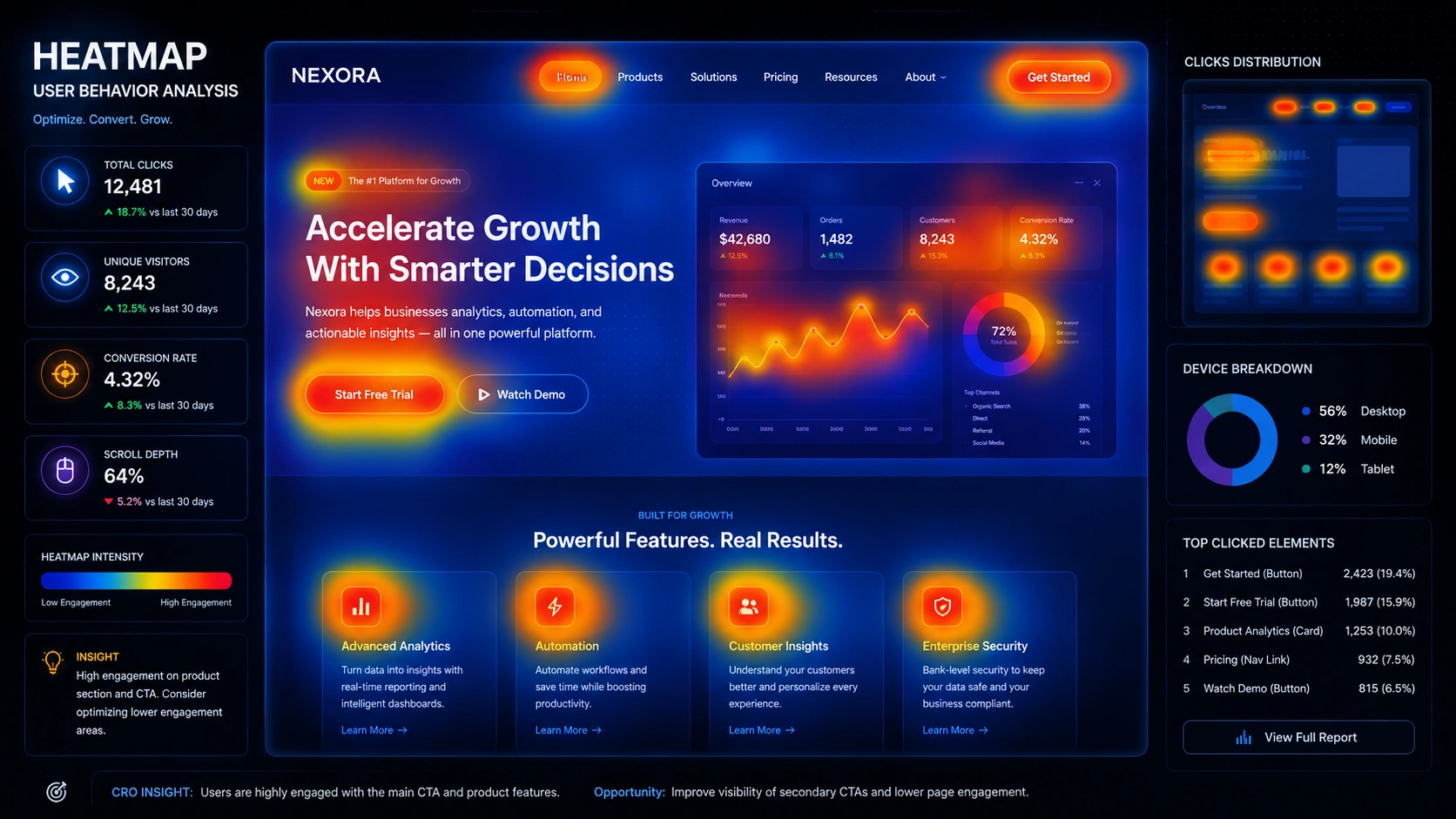
| Website Changes | “I don’t like the color of this button.” | “Heatmaps show users aren’t clicking this button; let’s move it.” |
| Email Marketing | “I’ll send an email every Monday.” | “Our data shows our audience opens emails at 7 PM on Thursdays.” |
| Result | ❌ Unpredictable Growth | ✅ Scalable, Predictable Growth |
Having data is useless if you don’t act on it. Here is how to use your numbers to optimize your services:
If your traffic is high but sales are low…
Your SEO is working, but your Web Design/CRO is failing. Fix the landing page.
If your ads have high clicks but no sign-ups…
Your ad “hook” is great, but your offer is weak. Change the offer or the price.
If your email open rates are dropping…
Your audience is bored. It’s time to refresh your Content Marketing strategy.
✅ DO: Set clear goals before starting. Know exactly what “success” looks like (e.g., 50 new leads per month).
❌ DON’T: Panic over a single bad day. Data is about trends, not a single 24-hour window.
✅ DO: Use tools like Google Analytics 4 and Heatmaps. These tools tell you exactly where your customers are coming from and where they are getting stuck.
❌ DON’T: Try to track everything. Tracking 100 different numbers will confuse you. Pick 3-5 key metrics and master them.
✅ DO: Test everything (A/B Testing). Test two different headlines or two different images to see which one the data prefers.
❌ DON’T: Trust your “gut” over the numbers. Even experts are wrong; the data is usually right.
Q: I’m a very small business. Is data-driven marketing only for big companies?
A: Absolutely not. In fact, small businesses need it more because they have smaller budgets. You cannot afford to waste money on ads that don’t work.
Q: Which tool should I start with to track my data?
A: Start with Google Analytics and Google Search Console. They are free and provide the foundation for all your SEO and website data.
Q: How often should I review my marketing data?
A: We recommend a “Deep Dive” once a month and a “Quick Check” once a week. This allows you to spot problems early without obsessing over every single click.
In 2026, the competitive advantage doesn’t go to the business with the most money—it goes to the business with the best data. When you stop guessing and start measuring, you stop worrying and start scaling.
Stop gambling with your marketing budget.
At Jash Marketing, we don’t just provide services; we provide proof. We use advanced analytics to ensure every campaign we run is optimized for maximum profit.
Ready to see the real numbers behind your business? Contact us today for a data-driven audit of your digital presence!
Every few years, someone claims that “Email is dead.” They say that social media, WhatsApp, or AI chatbots have replaced it.
They are wrong.
In 2026, email is more powerful than ever. Why? Because social media is “rented land.” If Instagram changes its algorithm or TikTok gets banned, you lose access to your audience overnight.
But your email list? You own it.
Email is the only channel that allows you to land directly in your customer’s personal space—their inbox—without an algorithm deciding if you’re “worthy” of being seen. If you aren’t building a list, you are leaving your business growth to chance.
If you’re ready to stop guessing and start growing, explore our Email Marketing services.
In the past, “personalization” meant starting an email with “Hi [First Name].” In 2026, that’s not enough. Customers now expect Hyper-Personalization.
Hyper-personalization uses data to send the right message to the right person at the exact right time.
Example of the difference:
Basic Personalization: “Hi John, check out our new summer sale!”
Hyper-Personalization: “Hi John, we noticed you were looking at the Blue Leather Boots last Tuesday. They are almost sold out in your size (10), but we’ve saved a pair for you with a 10% discount for the next 24 hours!”
The second email doesn’t feel like marketing; it feels like a personal concierge service. This is how you drive massive sales in 2026.
You don’t have time to send a manual email to every new lead. That’s where Automation comes in. Automation allows you to build a “journey” that takes a stranger and turns them into a buyer while you sleep.
The Essential 2026 Automation Flows:
The Welcome Sequence: The moment someone signs up, they get a series of 3-5 emails introducing your brand, providing value, and offering a first-time discount.
The Abandoned Cart Flow: When someone adds a product to their cart but leaves, an automated reminder brings them back to finish the purchase.
The Re-Engagement Flow: If a customer hasn’t opened an email in 60 days, an automated “We miss you!” email with a special offer brings them back to life.
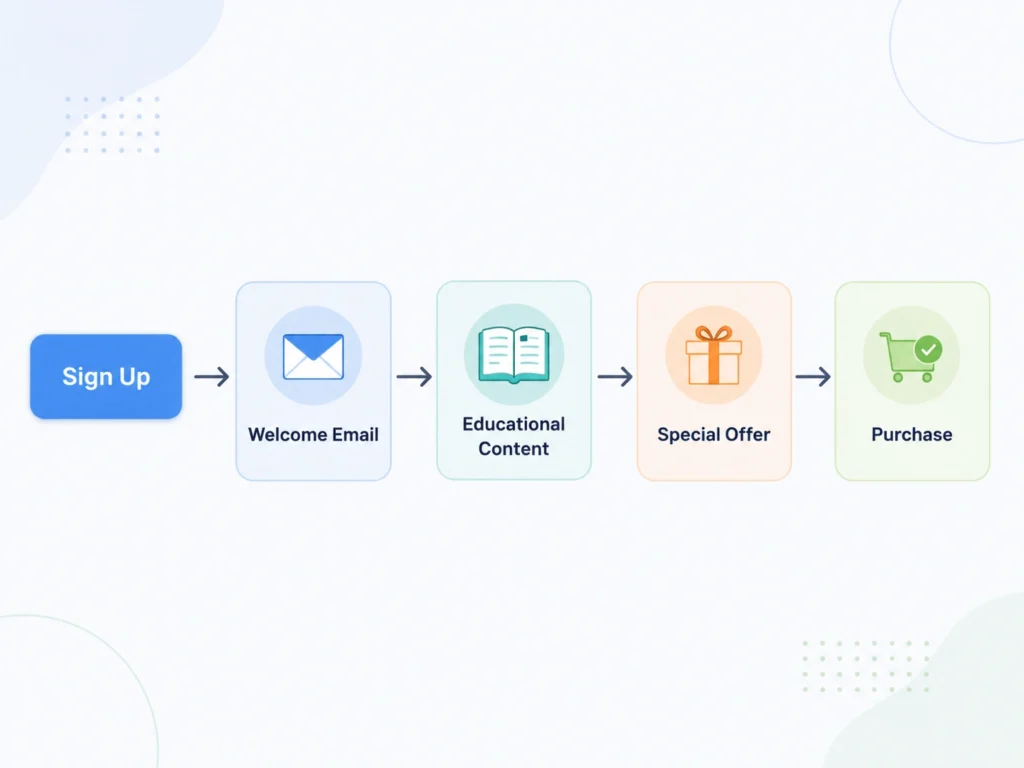
Turn strangers into buyers automatically with a smart email sequence.
You can’t just put a “Join my Newsletter” box in the footer of your website. Nobody wants more newsletters. Instead, you need a Lead Magnet—something of value that people are happy to trade their email for.
High-Converting Lead Magnet Ideas for 2026:
✅ A free PDF guide or “Cheat Sheet” solving a specific problem.
✅ A limited-time discount code (e.g., “Get 15% off your first order”).
✅ A free tool, calculator, or mini-audit.
✅ Exclusive access to a “VIP” community or early product drops.
To get more people to see your lead magnets, you can use Paid Ads or optimize your SEO to attract the right traffic.
| Feature | Social Media (FB, IG, TikTok) | Email Marketing |
| Ownership | ❌ Rented (The platform owns the data) | ✅ Owned (You own the list) |
| Reach | ❌ Low (Algorithm limits views) | ✅ High (Direct to inbox) |
| Privacy | ❌ Low (Cookies are dying) | ✅ High (Direct permission) |
| Conversion | ❌ Medium (Distractions everywhere) | ✅ Very High (Focused environment) |
| Cost | ✅ Free (until you pay for ads) | ✅ Low (Subscription-based) |
✅ DO: Focus on the Subject Line. If the subject line is boring, the email is never opened. Use curiosity or urgency.
❌ DON’T: Buy email lists. This is the fastest way to get marked as spam and get your account banned.
✅ DO: Provide 80% value and 20% sales. If you only sell, people will unsubscribe. Give them tips and help first.
❌ DON’T: Send too many emails. Overwhelming your audience leads to “Inbox Fatigue.” Find a consistent rhythm.
✅ DO: Use a clear Call to Action (CTA). Tell them exactly what to do next. “Click here to buy,” “Reply to this email,” or “Book your call.”
❌ DON’T: Use “spammy” words. Avoid using “FREE!!!” or “MAKE MONEY FAST” in all caps, as this triggers spam filters.
Q: Is email marketing expensive for a small business?
A: Not at all. Many platforms have free tiers for your first 1,000 subscribers. The ROI (Return on Investment) of email is generally the highest of all digital marketing channels.
Q: How often should I send emails?
A: It depends on your business. For most, 1 to 2 times a week is the “sweet spot.” The key is consistency—don’t send 10 emails in one week and then go silent for a month.
Q: What is the best way to increase my open rates?
A: A/B test your subject lines. Send two different subject lines to a small part of your list, see which one wins, and send the winner to the rest.
In a world of changing algorithms and disappearing cookies, your email list is your digital fortress. It is the only place where you have a direct, unfiltered conversation with your customers.
Whether you have 10 subscribers or 10,000, the goal is the same: build trust, provide value, and stay top-of-mind.
Stop leaving your growth to the algorithm.
Let Jash Marketing help you build an automated email system that generates leads and sales on autopilot.
Ready to own your audience? Contact us today and let’s start building your list!
Introduction
If you own a business, you probably know that you need to be “online” to survive. But “being online” is not the same as “making money.”
Many business owners create a website or a Facebook page and then wait for customers to arrive. But the truth is, the internet is crowded. To stand out, you need a Digital Marketing Strategy.
In simple words, digital marketing is just using the internet to find people who need your product and convincing them to buy from you. In this guide, we will break down the best ways to grow your business without the confusing tech jargon.
A strategy is simply a plan. Instead of trying everything at once, a strategy helps you pick the right tools for your specific business.
For example, a plumber needs people to find them quickly on Google (Local SEO), while a clothing brand needs beautiful photos on Instagram (Social Media).
If you aren’t sure where to start, you can explore our Full Range of Services to see what fits your needs.
To grow a business online, you need a balance of these five things. Think of them as the “engine” of your growth.
SEO is the art of making your website show up at the top of Google when people search for what you sell. If you are on page 1, you get the clicks. If you are on page 2, you are invisible.
Why it matters: It brings “free” traffic to your site 24/7.
Action: Boost your visibility with our SEO Services.
While SEO takes time, Paid Ads are like a “fast forward” button. You pay Google or Meta to show your business to the exact people who are likely to buy.
Why it matters: It generates leads and sales almost instantly.
Action: Stop wasting ad spend and start winning with our Paid Ads services.
Social media is where you build a relationship with your customers. It’s not just about posting photos; it’s about building trust and showing the “human side” of your business.
Why it matters: It turns strangers into loyal fans.
Action: Grow your community with our Social Media services.
Your website is your digital storefront. If it looks old, is hard to use, or loads slowly, people will leave and go to your competitor.
Why it matters: A great website turns visitors into paying customers.
Action: Get a high-converting site with our Web Development and Design services.
Content (blogs, videos) attracts people, and Email Marketing keeps them coming back. By sending helpful emails, you remind your customers that you exist.
Why it matters: It establishes you as an expert in your field.
Action: Build authority with Content Marketing and Email Marketing.
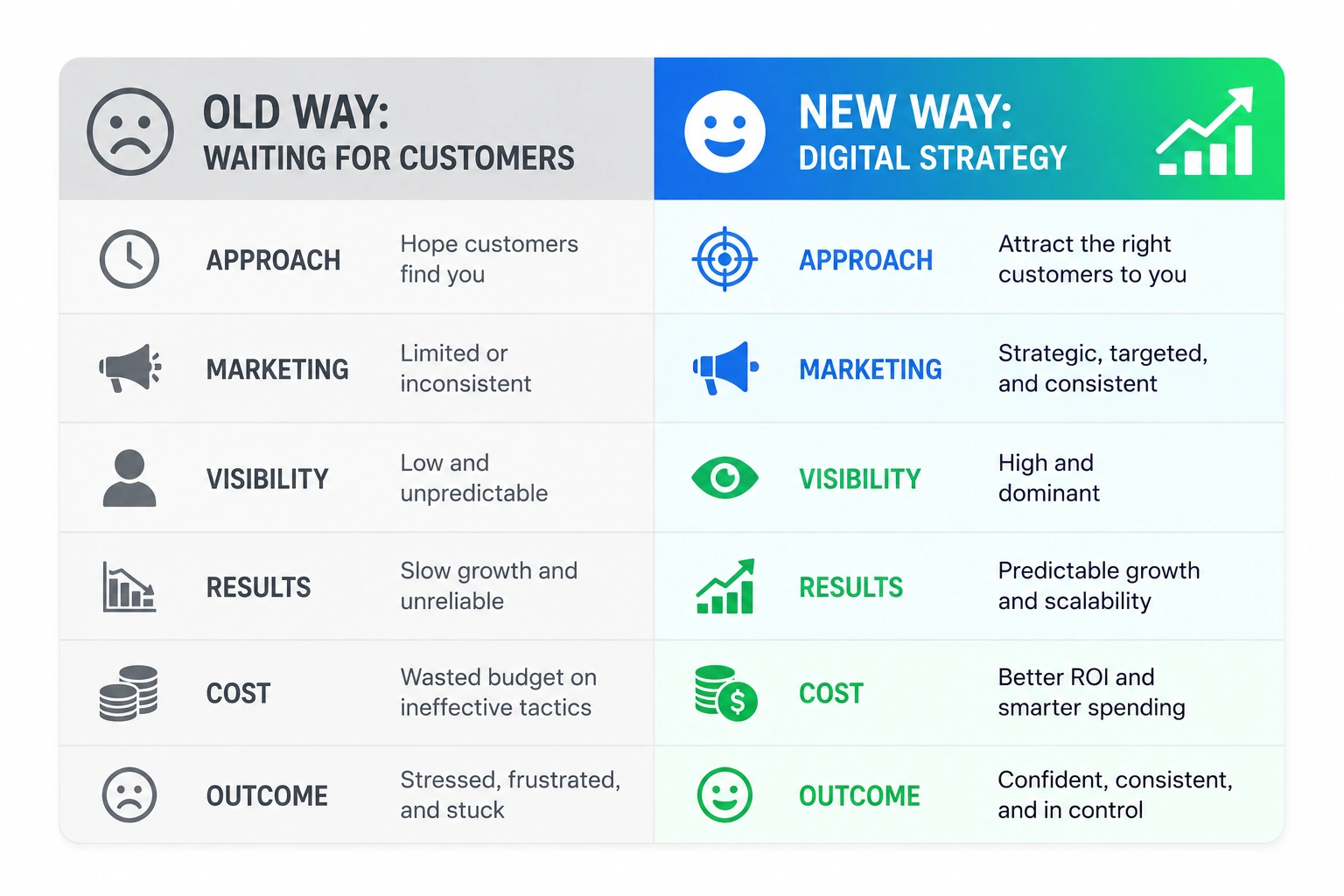
A strategic approach leads to faster growth.
You don’t have to do everything at once. Here is a simple 3-step plan for any small business:
Fix the Home: Make sure your website is fast and looks great on mobile.
Get Found: Set up your Local SEO and run a few targeted ads to get immediate traffic.
Stay Connected: Use social media and emails to keep your customers happy and loyal.
If this sounds like too much work, don’t worry. That is what we are here for. You can check our Pricing Plans to find a package that fits your budget.
Q: How long does it take to see results from digital marketing?
A: Paid Ads work almost instantly. SEO and Social Media growth usually take 3 to 6 months to show a big difference, but the results last much longer.
Q: Do I really need a website if I have a Facebook page?
A: Yes. You don’t own your Facebook page—Facebook does. If they change the rules or delete your account, you lose your business. You own your website.
Q: Which is better: SEO or Paid Ads?
A: Both! Ads give you quick wins, while SEO gives you long-term stability. A great strategy uses both.
(For more answers, visit our FAQ Page.)
Digital marketing is no longer “optional”—it is the only way to grow in today’s world. But you don’t have to struggle with it alone.
Whether you need a beautiful website, a top spot on Google, or a flood of new leads from ads, Jash Marketing is here to help you win.
Stop guessing and start growing today.
👉 Click here to get a FREE consultation and custom strategy from Jash Marketing!
“I post every day, but no one is buying.”
We hear this from business owners all the time. They spend hours taking photos, writing captions, and posting on Instagram or Facebook, but their bank account doesn’t change.
Here is the hard truth: Likes do not pay the bills. Leads do.
If you are posting just to “be active,” you are wasting your time. You don’t need more followers; you need a strategy that turns a stranger into a follower, and a follower into a customer.
Many people focus on Engagement (likes, comments, and shares). While these are nice, they are “vanity metrics.” You can have 10,000 followers and $0 in sales.
To grow your business, you need to focus on Conversion. This means giving people a clear reason to stop scrolling and actually contact you.
(SEO Tip: If you are tired of guessing what to post, our Social Media Marketing services can create a growth plan that actually brings in money.)
Right now, the fastest way to reach new people is through short-form video. Whether it’s Instagram Reels, TikTok, or YouTube Shorts, these platforms are pushing video more than photos.
Videos allow people to see your face, hear your voice, and trust you. Trust is the number one reason people buy from a small business.
You don’t need a movie studio. Just use your phone and try these:
Behind the Scenes: Show how you make your product or prepare your service.
Customer Win: Share a quick story of how you helped a client.
The “Quick Tip”: Give away one piece of free, helpful advice related to your business.
One of the biggest reasons people unfollow businesses is that the business only posts “Buy my product!” messages. This is boring.
To keep people interested, use the 80/20 Rule:
80% Helpful/Entertaining Content: Give value. Teach something, make them laugh, or inspire them. This builds the relationship.
20% Sales Content: Now that they trust you, tell them how to buy. “Book a call,” “Buy now,” or “DM for a quote.”
(SEO Tip: Creating a mix of value and sales takes time. Our Content Marketing services can help you write posts that attract and convert.)
Once you have their attention, you must move them off social media and into your business. Social media is the “handshake,” but your website or email list is where the “deal” happens.
Use a clear Call-to-Action (CTA): Instead of “Check out my new post,” use “Click the link in my bio to get a free quote.”
Talk to people in the DMs: When someone likes your post or asks a question, don’t just “like” it. Start a conversation.
Social media is a powerful tool, but only if you use it with a purpose. Stop posting just to be “active” and start posting to be “profitable.”
Want a social media presence that actually makes money?
At Jash Marketing, we don’t just post pictures; we build sales funnels. We help you find the right audience and give them the right message to make them buy.
👉 Check out our Pricing Plans to see which strategy fits your business.
👉 Click here to get a FREE Social Media Audit and consultation with Jash Marketing today!
You’ve spent money on Paid Ads, you’ve worked hard on your SEO, and your traffic is growing. People are visiting your site.
But here is the scary part: Most of them are leaving within seconds without buying anything.
If you have a lot of visitors but very few leads or sales, you don’t have a “traffic problem”—you have a Conversion Problem.
In 2026, customers are smarter and more impatient than ever. If your website is hard to navigate or feels untrustworthy, they will leave in a heartbeat. The solution? CRO (Conversion Rate Optimization).
In simple words, CRO is the process of improving your website so that a higher percentage of visitors take the action you want them to take.
That “action” (the conversion) could be:
Buying a product.
Filling out a contact form.
Signing up for a newsletter.
Calling your business.
The Math of CRO:
If 1,000 people visit your site and 10 buy something, your conversion rate is 1%.
If we use CRO to make that rate 3%, you now have 30 sales from the same amount of traffic. You just tripled your money without spending an extra cent on ads!
If your site isn’t converting, it’s time for a professional upgrade. Check out our Web Development & Design services.
If a visitor has to “think” about how to use your site, you’ve already lost them. User Experience (UX) should be invisible. The path from the Homepage to the Checkout/Contact page should be a straight line.
In 2026, people don’t believe what you say about your business; they believe what others say. If your site has no reviews, no client logos, and no case studies, visitors will feel it’s too risky to buy from you.
“Submit” or “Contact Us” are boring. They don’t inspire action. Your CTA should be a strong command that promises a benefit.
Bad: “Submit”
Good: “Get My Free Quote Now!”
To stay competitive this year, your website needs more than just a nice color scheme. It needs these three things:
A. AI-Driven Personalization
Modern websites now change based on who is visiting. If a returning customer visits, the site should show them products they previously liked, not a generic welcome message.
B. Hyper-Fast Mobile Performance
Mobile devices are no longer “secondary.” In 2026, your site must load in under 2 seconds on a 4G connection, or Google will hide you from search results.
C. Accessibility (Inclusive Design)
Making your site usable for people with visual or hearing impairments isn’t just a nice thing to do—it’s a huge SEO boost and opens your business to a larger audience.
| Feature | The “Pretty” Website | The “Converting” Website |
| Focus | Looks, colors, and animations | User goals and sales |
| Navigation | Complex, “Creative” menus | Simple, intuitive paths |
| Loading Speed | Slow (due to heavy images) | Lightning fast (optimized) |
| CTA Buttons | Hidden or generic | Bold, clear, and benefit-driven |
| Content | “About Us” focused | “Customer Problem” focused |
| Result | “Wow, nice site!” (but no sale) | “I need this!” Purchase |
Check these 5 things to see if your website is optimized:
✅ Does my homepage state exactly what I do in the first 5 seconds?
✅ Is there a clear “Contact/Buy” button in the top right corner?
✅ Do I have at least 3 real customer testimonials on the main page?
✅ Does the site load in under 3 seconds on my phone?
✅ Is my contact form short (only ask for the essentials)?
Q: Do I need to redesign my whole website for CRO?
A: Not always. Sometimes small changes (like changing a button color or rewriting a headline) can increase sales. However, if your site is old, a full redesign is often the most cost-effective choice.
Q: How do I know where people are getting stuck on my site?
A: We use tools like Heatmaps and Session Recordings to watch how users move. This allows us to see exactly where they get confused and fix it.
Q: Is CRO better than SEO?
A: They are partners. SEO brings the people to the door; CRO makes sure they walk in and buy. Doing SEO without CRO is like paying for ads to send people to a store with no salesperson.
A website should not be an expense; it should be your most profitable employee. If your site is just sitting there looking “pretty” but not bringing in leads, you are leaving money on the table.
Stop guessing and start converting.
Let the experts at Jash Marketing turn your website into a high-performance sales machine.
Ready for a free website audit? Contact us today and let’s find out where you are losing money!
Let’s be real: “Likes” are a vanity metric. You can have 10,000 followers and still have zero sales.
In 2026, the digital world has changed. Algorithms are now powered by hyper-intelligent AI that prioritizes meaningful interaction over mindless scrolling. If people aren’t commenting, sharing, and talking to your brand, the algorithm simply stops showing your content.
The secret to winning this year is Community-Led Growth. It is no longer about how many people follow you, but how many people trust you.
If you are struggling to get engagement, our Social Media Marketing services can help you build a loyal fanbase.
For years, businesses focused on “reaching” as many people as possible. In 2026, the focus is on “connecting” with the right people.
The difference is simple:
Followers: People who see your posts but don’t care if you disappear tomorrow.
Community: People who defend your brand, recommend you to friends, and wait for your next product launch.
To move from followers to community, you must stop acting like a corporate billboard and start acting like a human.
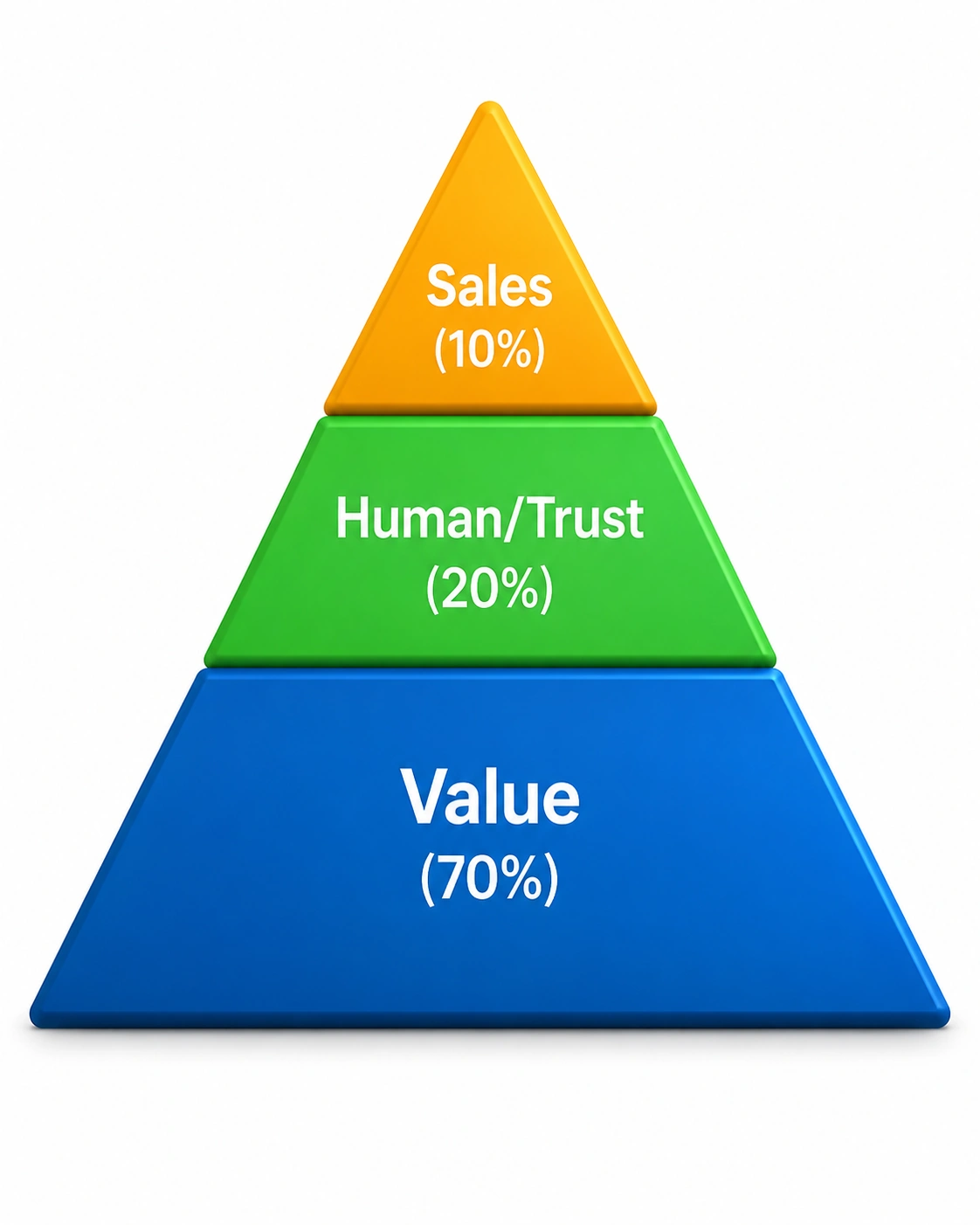
You cannot just post “Buy my product” every day. To keep people engaged, you need a balanced content mix. We recommend the 70-20-10 Rule:
1. Value-Based Content (70%)
This is content that helps your audience for free. Tips, tutorials, “how-to” guides, and industry secrets.
Example: A skincare brand posting “The 5 biggest mistakes people make with sunscreen.”
2. Human-Centric Content (20%)
This is the “behind the scenes.” Show your team, your failures, your office, and your personality. This builds the trust that AI cannot replicate.
Example: A “Day in the Life” reel of the business owner.
3. Promotional Content (10%)
This is where you actually sell. Because you’ve provided so much value (70%) and trust (20%), people are now happy to buy from you.
Example: “Our new summer collection is live! Shop now.”
Many businesses ask: “Should I just post organically or pay for ads?” In 2026, the answer is both.
Organic Social is for building trust and keeping your current customers happy.
Paid Social is for finding new people who have never heard of you.
| Goal | Organic Strategy (Free) | Paid Strategy (Ads) |
| Brand Trust | ✅ High (Real conversations) | ❌ Low (Feels like a pitch) |
| Reach Speed | ❌ Slow (Algorithm dependent) | ✅ Instant (Targeted reach) |
| Customer Loyalty | ✅ Very High | ❌ Medium |
| Lead Generation | ❌ Medium | ✅ Very High |
Want to accelerate your growth? Use Paid Ads to push your best organic posts to a wider audience.
If your social media growth has stalled, you might be following outdated 2022 rules. Here is what to change:
❌ STOP: Posting generic stock images.
✅ START: Using raw, authentic, “lo-fi” video content.
❌ STOP: Ignoring your comments for days.
✅ START: Replying to every single comment within the first hour.
❌ STOP: Trying to be on every single platform.
✅ START: Dominating one or two platforms where your customers actually spend time.
If you aren’t sure which platform is right for your business, check out our Content Marketing strategy to find your voice.
Q: Which platform is best for business in 2026?
A: It depends on your audience! TikTok and Reels are best for discovery (Gen Z/Millennials), LinkedIn is king for B2B, and Facebook remains strong for local community groups and older demographics.
Q: How often should I post to stay relevant?
A: Consistency is better than frequency. It is better to post 3 times a week every week than to post 3 times a day for one week and then disappear for a month.
Q: Do hashtags still work in 2026?
A: Less than they used to. AI now reads the actual text in your caption and the visuals in your video to categorize your content. Use 3-5 highly specific hashtags rather than 30 random ones.
Social media in 2026 is not about who has the loudest voice, but who listens the best. When you stop trying to “sell” and start trying to “help,” your community will grow naturally.
Stop shouting into the void.
Let the experts at Jash Marketing help you build a social presence that actually converts followers into paying customers.
Ready to dominate the feed? Contact us today and let’s build your community!
You’ve built a beautiful website. You’re posting on social media. You’re working on your SEO. But there is one problem: You need customers now, not in six months.
This is where Paid Ads (also known as PPC or Pay-Per-Click) come into play.
Unlike SEO, which is like planting a tree and waiting for it to grow, Paid Ads are like flipping a switch. The moment your campaign goes live, your business appears in front of thousands of potential customers.
But if you don’t do it right, you can waste a lot of money very quickly. In this guide, we will show you how to use paid ads to get a high return on your investment (ROI).
PPC stands for Pay-Per-Click. It is a model of internet marketing where you don’t pay for the ad to be shown; you only pay when someone actually clicks on your ad.
Think of it as buying a shortcut to the top of the search results or the top of a social media feed.
The biggest mistake beginners make is picking the wrong platform. The secret is knowing where your customer is and what they are doing.
Google Ads (Search Intent): People go to Google when they are actively looking for a solution. (Example: “Emergency plumber near me”). This is high-intent traffic.
Facebook/Instagram Ads (Interests): People go to social media to be entertained. They aren’t searching for you, but you can show your ad to them based on their interests, age, or location. (Example: Showing a luxury watch ad to someone who likes fashion).
| Feature | Google Ads (Search) | Facebook/Instagram Ads |
| User Mindset | “I need this right now.” | “This looks interesting.” |
| Best For | Immediate leads / Services | Brand awareness / Products |
| Targeting | Based on Keywords | Based on Demographics/Interests |
| Speed of Sale | Very Fast | Medium |
If you aren’t sure which one to pick, our Paid Ads specialists can analyze your business and pick the winning platform for you.
Spending money is easy; making money is the hard part. To ensure your ads actually bring in profit, focus on these three things:
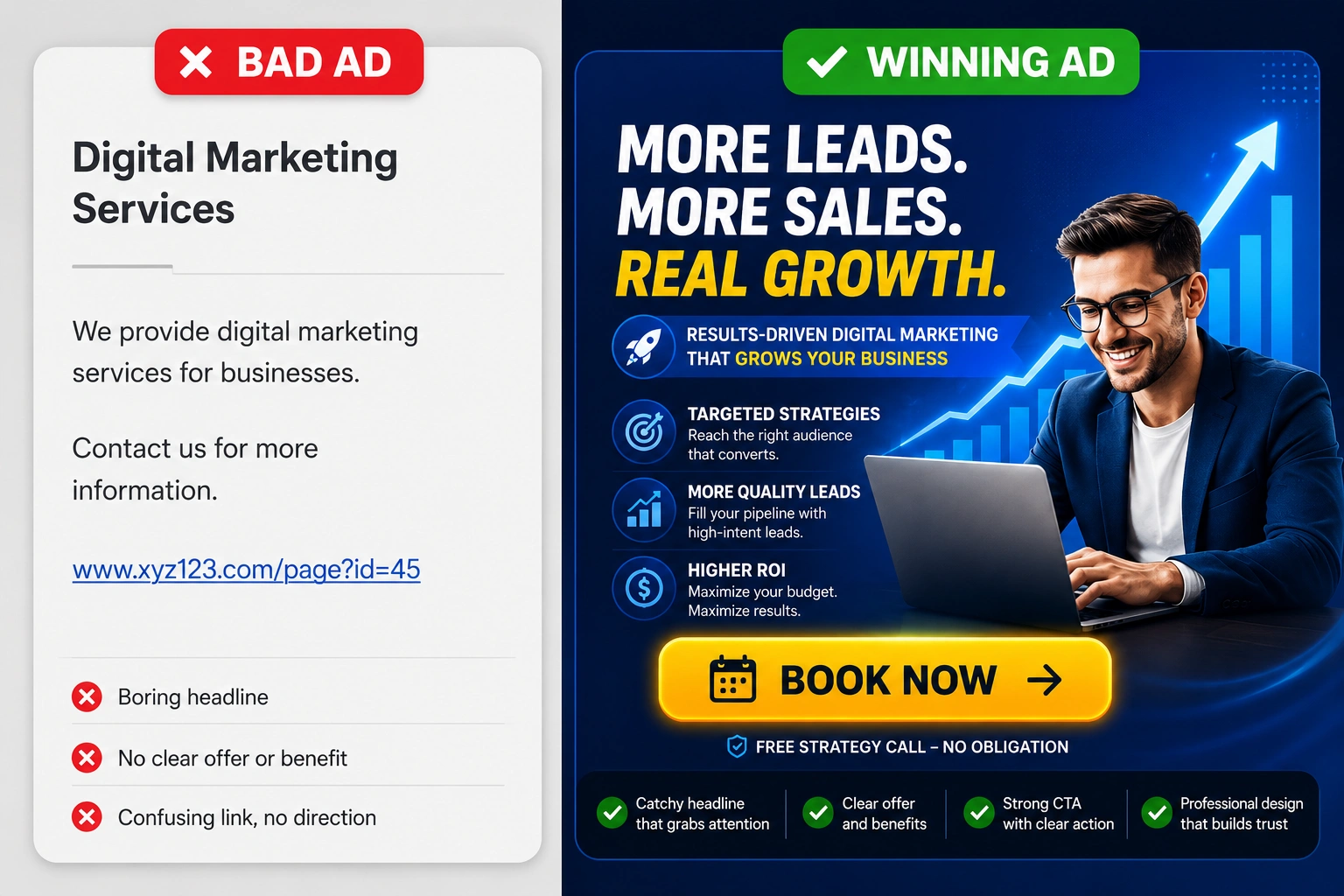
Your headline must stop the scroll. Instead of saying “We offer the best cleaning services,” try “Get Your Home Sparkling Clean in 2 Hours – First Visit 20% Off!” Focus on the benefit, not the feature.
If you sell high-end jewelry, don’t show your ads to teenagers. Use the targeting tools to narrow down your audience by location, income, interests, and behavior.
This is where most people fail. If your ad promises a “20% Discount,” but the link takes the user to your home page where they have to search for the discount, they will leave.
Your ad must lead to a specific page that matches the promise of the ad.
Need a page that converts? Check out our Web Development & Design services.
Setting a budget too low: If your competitors are bidding $5 per click and you bid $0.50, your ad will never be seen.
Ignoring Negative Keywords: In Google Ads, you can tell Google not to show your ad for certain words. For example, if you provide “Paid Consulting,” add “Free” as a negative keyword so you don’t pay for clicks from people looking for free advice.
Not Testing: Never run just one ad. Run three different versions (A/B Testing) to see which one gets more clicks.
Q: How much budget do I need to start with Paid Ads?
A: You can start with as little as $5 or $10 a day. However, to get enough data to see what’s working, we usually recommend a slightly higher starting budget for the first month.
Q: Is PPC better than SEO?
A: Neither is “better.” They work together. PPC gives you instant leads today, while SEO builds a foundation for free traffic tomorrow. The best strategy is to use both. Learn more about SEO services here.
Q: How do I know if my ads are working?
A: We track “Conversions.” A conversion is when a user does what you want them to do (e.g., fills out a contact form or makes a purchase). If you spend $100 on ads and make $500 in sales, your ads are working!
Paid ads are the fastest way to grow a business, but they require a professional strategy to avoid wasting money. When done correctly, PPC is like a machine: you put money in, and leads come out.
Stop guessing with your marketing budget.
Let the experts handle your campaigns. Contact Jash Marketing today and let’s scale your business to the next level!
Imagine this: Someone in your city is searching for the exact service you provide. They type “Best [Your Service] near me” into Google.
Do they find you? Or do they find your competitor?
If you aren’t appearing in the top 3 results of the Google Map Pack, you are losing money every single day. This is where Local SEO comes in.
Local SEO is the process of optimizing your online presence to attract more business from relevant local searches. In this guide, we’ll show you exactly how to dominate your local market.
Your Google Business Profile (formerly Google My Business) is the single most important tool for local growth. It is the box that appears on the right side of the search results and in Google Maps.
To optimize your profile, make sure you:
Complete every section: Add your address, phone number, website, and business hours.
Choose the right category: If you are a “Pizza Restaurant,” don’t just put “Restaurant.” Be specific.
Add high-quality photos: Businesses with photos get significantly more clicks than those without.
Write a clear description: Tell people exactly what you do and what makes you better than the competition.
If you’re struggling to get your profile seen, our expert SEO services can help you rank higher.
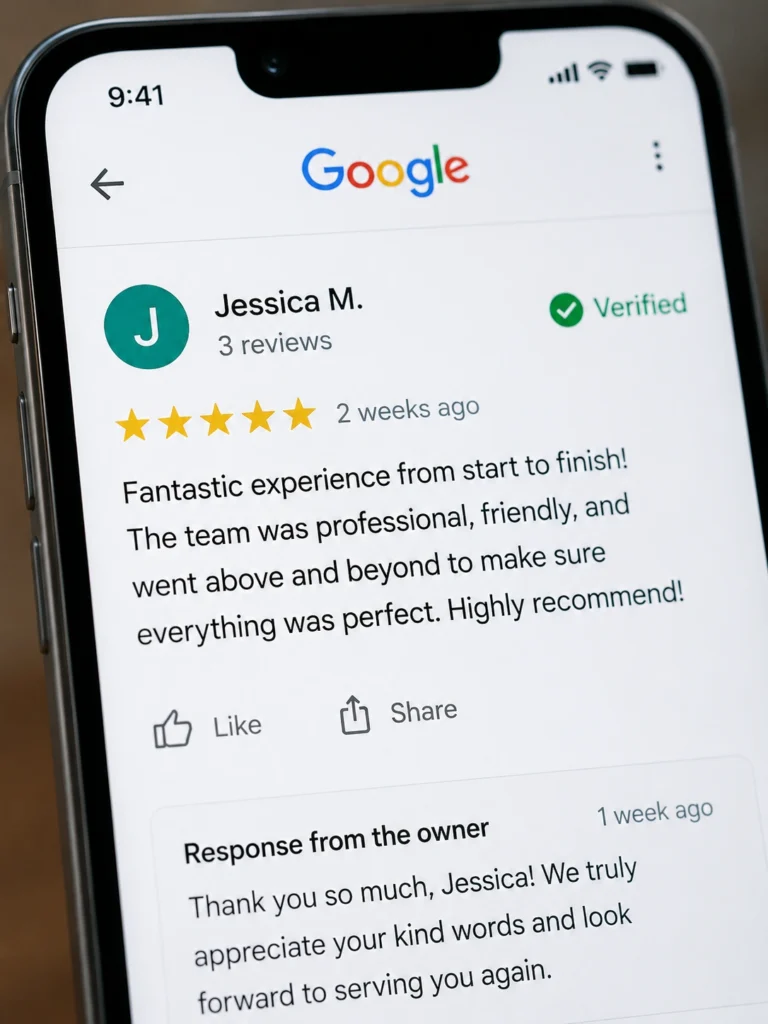
When people look for a local business, they don’t trust the business—they trust other customers.
Reviews are a huge ranking factor for Google. The more 5-star reviews you have, the higher Google will push you up the list.
How to get more reviews:
Just ask: Most happy customers are glad to leave a review if you remind them.
Make it easy: Send them a direct link to your review page via email or SMS.
Always reply: Whether the review is positive or negative, reply politely. It shows Google (and future customers) that you are active and care.
You shouldn’t just target keywords like “Digital Marketing.” You should target “Digital Marketing in [Your City].”
When you include your city or neighborhood name in your headings and text, Google understands exactly where you are located and who you serve.
Examples of Local Keywords:
“Best plumbing services in [City Name]”
“Affordable lawyer near [Neighborhood Name]”
“Top-rated dental clinic in [City Name]”
Creating local-focused articles is a great way to build authority. Check out our Content Marketing services to create a local content plan.
NAP stands for Name, Address, and Phone Number.
Google crawls the entire web to verify your business. If your address is “123 Main St” on your website, but “123 Main Street” on Facebook and “123 Main Rd” on Yelp, Google gets confused.
When Google is confused, your rankings drop. Make sure your NAP is exactly the same across:
Your Website
Social Media Profiles
Online Directories (Yelp, Yellow Pages, etc.)
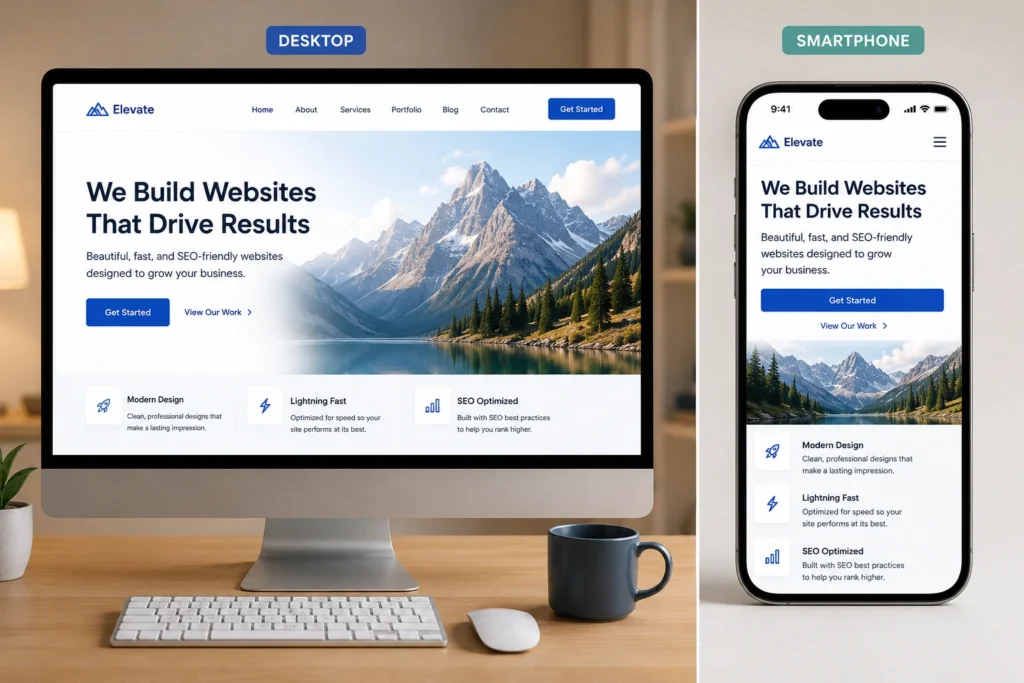
Most local searches happen on the go. Someone is walking down the street or driving in their car when they search for a business “near me.”
If your website takes too long to load or looks broken on a phone, the user will hit the “back” button and click on your competitor.
A mobile-friendly site needs:
Fast loading speed.
Easy-to-click buttons (especially the “Call Now” button).
A simple layout that doesn’t require zooming in.
Is your website ready for mobile users? Our Web Development & Design team can build you a lightning-fast, mobile-responsive site.
| Action Item | Importance | Frequency |
| Claim Google Business Profile | ⭐⭐⭐⭐⭐ | Once |
| Ask for Customer Reviews | ⭐⭐⭐⭐⭐ | Weekly |
| Check NAP Consistency | ⭐⭐⭐⭐ | Monthly |
| Post Local Content/Blogs | ⭐⭐⭐⭐ | Monthly |
| Optimize for Mobile Speed | ⭐⭐⭐⭐⭐ | Quarterly |
Q: How long does it take for Local SEO to work?
A: Local SEO usually works faster than national SEO. You can often see improvements in your Map rankings within 1 to 3 months.
Q: Do I need to pay for Google Ads to show up in the Map Pack?
A: No. The “Map Pack” (the top 3 local results) is organic. However, you can pay for “Local Services Ads” to appear even higher. Learn more about Paid Ads here.
Q: Does my business need a physical office for Local SEO?
A: Not necessarily. If you are a “Service Area Business” (like a plumber who goes to the customer), you can hide your home address and set a service area in your Google profile.
Local SEO is not a “one-time thing”—it is an ongoing process of building trust with Google and your community. By optimizing your profile, getting reviews, and ensuring your website is mobile-friendly, you can turn your business into the top choice in your city.
Stop letting your competitors take your customers.
Ready to rank #1 on Google Maps? Contact Jash Marketing today for a local SEO audit!