The top organic result on Google earns 27.6% of all clicks. The top paid ad earns 2.1%. Organic search outperforms paid by more than 13 to 1 on raw click share — yet most businesses spend a larger share of their search marketing budget on PPC than on SEO. This is the central paradox of the SEO vs PPC debate, and it has a rational explanation that most comparisons miss.
The right question is not which channel is better in absolute terms. It is which channel fits your specific timeline, budget, competitive situation, and revenue goals. This guide covers the 2026 data on both channels, the situations where each one clearly wins, and why the businesses with the strongest long-term results almost always run both.
The Core Difference: How SEO and PPC Actually Work
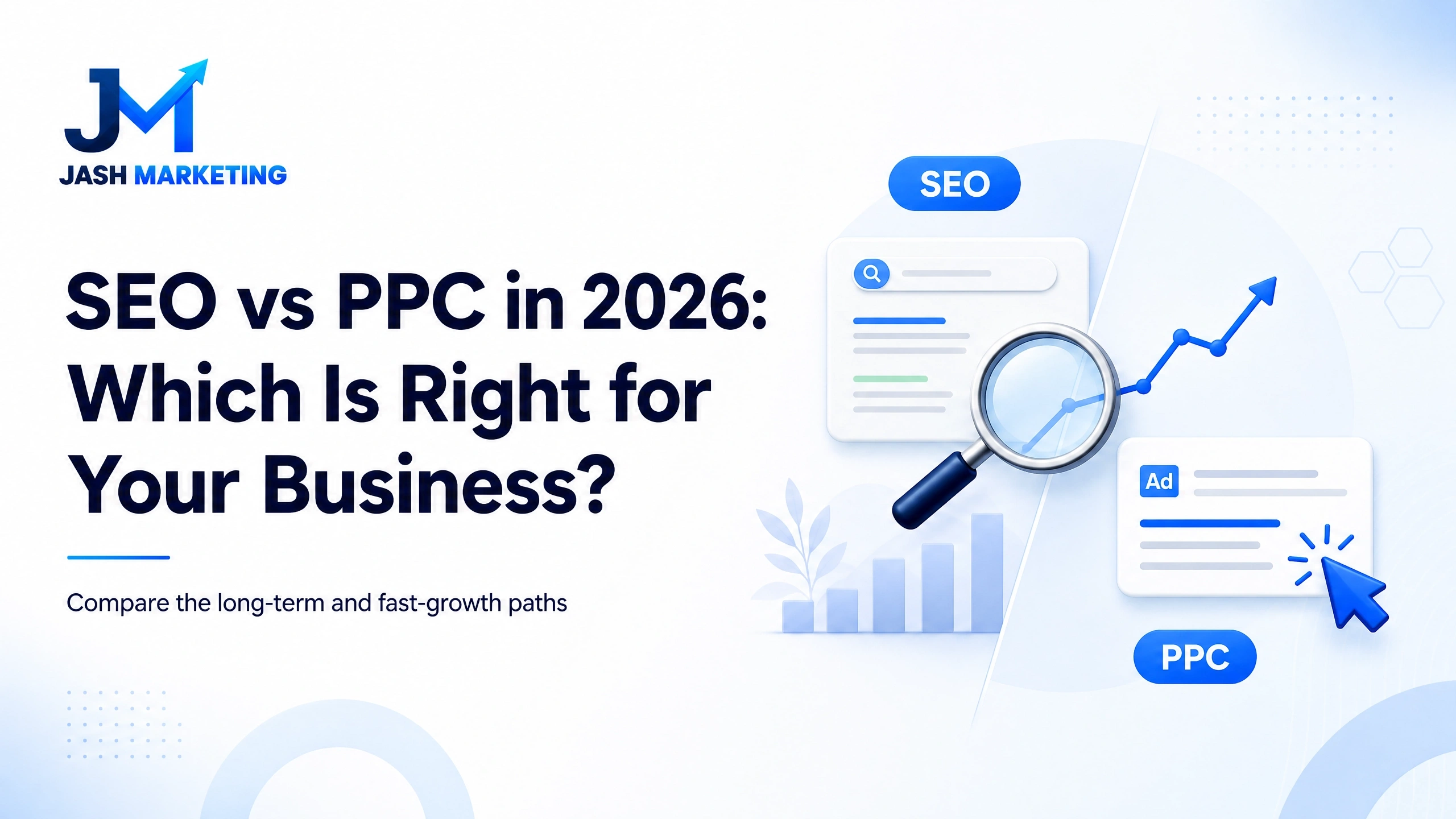
SEO (Search Engine Optimisation) is the process of optimising your website — its content, technical structure, and authority — so that it earns visibility in Google’s organic (unpaid) search results. You invest in content, technical fixes, and link building. When it works, traffic arrives without a cost-per-click. That traffic compounds over time as your rankings improve and each piece of content you’ve published continues to attract visits.
PPC (Pay-Per-Click) puts your ads at the top of search results immediately, in exchange for a bid on specific keywords. You pay every time someone clicks. You control exactly which keywords trigger your ads, exactly how much you spend, and exactly when campaigns run. Traffic is immediate and highly controllable — but it stops the moment your budget does.
These two channels are not simply alternatives to each other. They operate on different economic models, different timelines, and different risk profiles. Understanding that distinction is what makes the “which is better” question answerable for your specific situation.
SEO vs PPC: The 2026 Data Comparison
| Factor | SEO | PPC |
|---|---|---|
| Time to first results | 3–6 months | Same day |
| Average CTR (top position) | 27.6% | 2.1% |
| Average conversion rate | 14.6% | 3.75% |
| ROI over 24 months | ~22:1 | ~2:1 |
| Traffic when you stop investing | Continues | Drops to zero |
| Budget control | Low | Very High |
| Keyword test speed | Months | Days |
| B2B lead generation quality | Highest | High |
Sources: First Page Sage 2026 ROI data; BloGGersIdeas SEO vs PPC Statistics 2026 (citing WordStream, HubSpot, Search Engine Journal benchmarks).
The conversion rate gap deserves particular attention. SEO’s 14.6% average conversion rate versus PPC’s 3.75% reflects the intent quality difference between organic discovery and ad clicks. Someone who found your business by genuinely searching for what you offer — without any paid intervention — is typically further along in their decision process and less likely to have clicked casually. Organic leads close eight times more often than outbound leads, according to HubSpot data cited in comparative channel research.
When SEO Clearly Wins
You Have a 6–18 Month Runway Before You Need Volume
SEO is fundamentally a delayed-return investment. Depending on your keyword competition, domain authority, and content quality, meaningful ranking improvements typically take 3–6 months to appear and compound further over the following year. If your business needs leads next week, SEO will not solve that problem. If your business can invest now for returns that compound over 2–3 years, SEO’s economics — a 22:1 average ROI over 24 months versus approximately 2:1 for PPC — are dramatically more attractive than any paid channel.
Your Industry Has High CPCs That Erode PPC Economics
In legal, financial services, insurance, and B2B software — industries where CPCs can run $30–$100+ per click — PPC becomes very expensive to operate profitably. In these environments, earning organic rankings for the same high-intent keywords delivers the same or better traffic at no per-click cost once rankings are established. The upfront investment in content and link building is often recovered within the first 12 months of ranking.
You Want a Compounding Asset, Not a Running Cost
The most structurally important difference between SEO and PPC is what happens when you stop investing. PPC delivers instant volume; SEO builds compounding equity. When PPC budget is paused, traffic drops to zero — SEO traffic persists. A blog post that ranks for a high-intent keyword today will still be generating traffic in three years without further investment. No paid campaign does this. The content published in year one continues earning traffic in year three. This is why 49% of marketers cite SEO as their most profitable channel despite its slower start.
B2B or Longer Sales Cycles
For B2B businesses and high-consideration purchases, organic search tends to significantly outperform paid. 61% of B2B marketers say SEO generates more leads than any other marketing channel. Buyers in longer sales cycles do extensive research before contacting vendors — and they consistently favour organic results over ads during the research phase. Appearing in those research moments with genuinely useful content builds trust that a paid ad at the bottom of the funnel can’t replicate.
When PPC Clearly Wins
You Need Traffic Now
PPC puts your business at the top of search results the same day a campaign is approved. For product launches, seasonal promotions, new market entry, and any situation where waiting 3–6 months for organic results is not viable, PPC is the only search channel that delivers immediate volume. There is no organic equivalent of this.
You Need to Test Before You Commit
PPC is the fastest and cheapest way to validate whether a keyword or message converts before you invest months of SEO work into it. PPC generates insight that SEO can act on. Paid search campaigns reveal which keywords convert, which messaging resonates, and which landing page approaches drive action. That feedback loop is immediate — you don’t have to wait months for organic rankings to test a hypothesis. Running a 2-week PPC test on a new keyword before committing to creating content for it is a legitimate and efficient use of paid budget.
High-Commercial-Intent Bottom-of-Funnel Queries
For searches with explicit purchase intent — “buy X,” “X price,” “best X software” — paid ads are highly effective because the searcher is ready to transact. In these specific situations, PPC ads in top spots capture 46% of total paid clicks, underscoring the importance of ad rank quality and keyword intent. The 70–80% of users who generally skip ads make an exception for queries where they’ve already decided to buy and are comparing options.
You’re in a New Market With No Domain Authority
For a new website entering a competitive market, earning organic rankings against established domains can take 12–24 months. PPC levels the playing field immediately — a new site can outrank a 10-year-old competitor on day one of a campaign, if the bid and Quality Score are competitive. For businesses in this situation, PPC funds the business while SEO builds the long-term foundation underneath it.
Why the Answer in 2026 Is Almost Always Both
The “SEO vs PPC” framing is somewhat artificial — the real strategic question is how to allocate budget between the two, not which one to pick exclusively. Businesses combining SEO and PPC see 25% more clicks and 27% more profits versus using either channel in isolation. The reason is a reinforcing feedback loop that neither channel can create alone.
PPC data tells you exactly which keywords convert at the highest rate, what messaging resonates with your audience, and which landing pages turn visitors into customers. This intelligence is valuable regardless of whether you continue running paid ads — it directly informs which keywords deserve organic content investment, which topics should lead your editorial calendar, and what your strongest conversion arguments actually are. Without PPC running alongside SEO, organic teams are often guessing at this.
In the other direction: when a brand appears in both the top organic result and the top paid ad for the same keyword, overall conversion rates for that brand’s search presence improve. The dual visibility reinforces brand authority and pushes competitors further down the page. Users who see a brand both in organic results and in ads trust it more than a brand appearing only once — which is why the combined-channel ROI consistently exceeds what either channel delivers independently.
The practical budget framework that most growth-stage businesses find effective: allocate 60–70% of search marketing budget toward SEO and 30–40% toward PPC. Use PPC to maintain lead flow on your highest-value, bottom-of-funnel keywords while SEO builds organic authority across a broader keyword set. As organic rankings mature and deliver traffic on specific keywords, reduce PPC spend on those keywords and reallocate to terms where organic hasn’t yet reached page one. Over 12–24 months, this produces a steadily growing organic baseline with declining paid dependence — which means a lower cost-per-lead over time, not a constant one.
See how this plays out in practice: our SEO service and PPC management service are both designed to feed data back into each other — or you can run them together under a single pod through our Digital Marketing bundle.
The Decision Framework: Which Should You Start With?
If you genuinely have to choose one to start with, these are the deciding factors:
- Start with PPC if: you need leads within 30 days, you’re validating a new product or market, your SEO authority is near zero, or you’re in a short selling season.
- Start with SEO if: you have a 6–12 month runway, you’re in a high-CPC industry where ads are expensive, you’re building a B2B content strategy, or you want to build an owned traffic asset rather than a perpetual running cost.
- Run both if: your business is at growth stage, you have sufficient budget to invest in both, and you want a compounding advantage over competitors who are only using one.
The businesses that start with only PPC and never invest in SEO tend to reach a ceiling where rising CPCs erode their margins and they have no organic foundation to fall back on. The businesses that start only with SEO and never run any paid spend are often leaving bottom-of-funnel revenue on the table during the 3–6 months before organic rankings develop. The path through both — sequenced intelligently — avoids both outcomes.
If you want a clearer picture of what this looks like for your specific business, request a free growth audit — we’ll map your current search presence, identify where the gaps are, and recommend an allocation that fits your timeline and budget. Our flat-fee pricing for both SEO and PPC is published openly so you can evaluate the investment before any conversation.
Frequently Asked Questions
Is SEO better than PPC in 2026?
It depends on your timeline and goals. SEO delivers a 22:1 average ROI over 24 months versus approximately 2:1 for PPC, and organic traffic persists after investment stops while paid traffic drops to zero immediately. However, SEO takes 3–6 months to produce meaningful results. PPC wins on speed and control. For long-term economics, SEO wins clearly. For immediate lead generation, PPC is the only viable option. Most growth-stage businesses benefit from running both — combining them produces 25% more clicks and 27% more profit than either channel alone, according to cross-channel research.
Why does organic search get more clicks than paid ads?
Trust and relevance. The top organic result earns 27.6% of clicks because users have learned that organic results reflect genuine authority signals — real content that earned its position rather than bought it. Around 70–80% of users skip paid ads for informational queries and scroll to organic results. The exception is high-commercial-intent queries (“buy X now”), where paid ads capture a much higher share because the searcher is explicitly in purchase mode and less concerned with the authority signal that organic ranking provides.
How long does SEO actually take to show results?
For most websites targeting competitive keywords, meaningful ranking improvements appear in 3–6 months. Full compound performance — where a growing library of content generates significant organic traffic — typically develops over 12–18 months of consistent investment. The timeline is shorter for lower-competition niches and longer for high-authority competitive markets. The key variable is not time alone; it’s the consistency and quality of the work done during that time. Sporadic SEO investment produces sporadic results regardless of timeline.
Can PPC data improve SEO performance?
Yes — this is one of the most underutilised advantages of running both channels. PPC reveals which keywords convert at the highest rate within days of launching. That conversion data is directly applicable to SEO: the keywords that prove profitable in paid search are the same keywords worth prioritising in organic content investment. Running a small PPC campaign on a new topic before committing to organic content creation is a legitimate shortcut that makes SEO investment more precise and efficient.
Should a small business start with SEO or PPC?
For most small businesses with limited budget, a modest SEO investment that builds over time typically delivers better long-term value than a modest PPC budget that produces small, intermittent traffic while spend is active. However, the right answer depends on urgency. If the business needs customers within the next 30 days to survive, PPC is the only option that delivers that speed. If the business can invest for 6–12 months before expecting significant returns, SEO’s economics — no per-click costs, compounding returns, traffic that persists — make it the stronger choice.
The Bottom Line
The headline numbers favour SEO on economics: better long-term ROI, higher click share, higher conversion rates, and traffic that continues after investment stops. The headline numbers favour PPC on speed, control, and flexibility. Neither picture is complete without the other.
In 2026, the most competitive businesses are not choosing between SEO and PPC — they’re using PPC data to make their SEO investments more precise, and using organic rankings to reduce their long-term paid dependence. The reinforcing feedback loop between the two channels is where the 25% extra clicks and 27% extra profit come from.
Start where your timeline and budget dictate. Scale toward both as soon as you can. And if you’re not sure where your current mix stands, the Google Ads ROAS guide covers the paid side in detail — and our full service overview shows how we approach both together.